
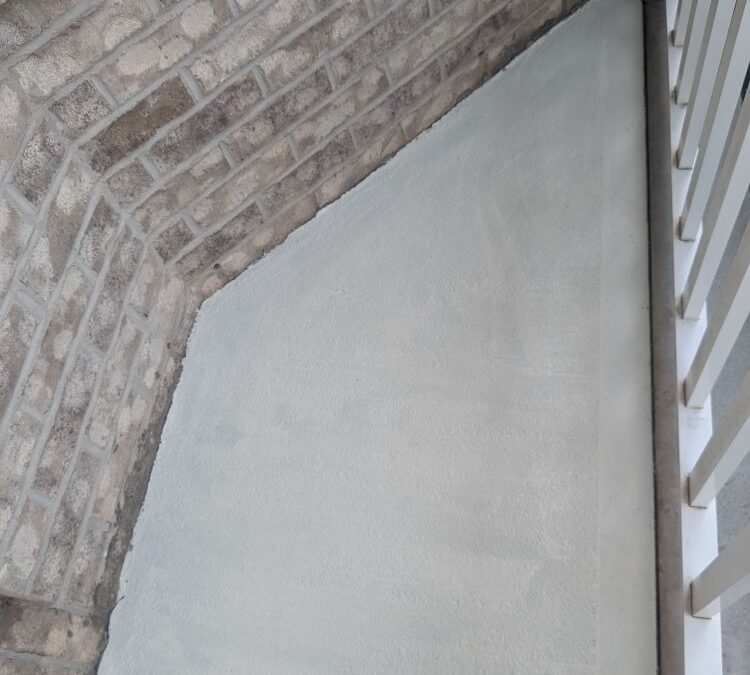
Repainting a porch or patio is one of those projects that looks simple, but the details determine whether it lasts a season or several years. Here’s a calm, step-by-step plan for homeowners to get durable, safer results—without overcomplicating it.
How is your underlying surface?
Before buying paint, make sure the surface is worth coating. A few 10-minute checks can save you days of rework. The most common porch/patios are:
1. Wood deck-style porch
- Press a screwdriver into suspect boards. Soft spots mean rot—replace, don’t paint over.
- Look for cupping or raised edges that will shed paint early.
- Tap down or replace popped nails/screws. Fasteners standing proud will telegraph through new paint.
- Note peeling or flaking film—these areas need sanding and potentially priming.
2. Concrete patio or stoop
- Check for spalling (surface flaking) and hairline cracks.
- White powder (efflorescence) signals moisture movement—address the moisture path first. Downspout splash-back is a common culprit. See Gutter Downspout Issues.
- Test for old sealer by dripping water. If it beads, you’ll need to strip or etch before paint sticks.
Pick the Right Coating (Wood vs. Concrete)
1. Wood
- 100% acrylic porch & floor enamel gives a durable film.
- Solid-color deck stain is more breathable and forgiving on older boards.
2. Concrete
- Use a quality 1-part acrylic concrete paint for most outdoor slabs.
- Avoid non-breathable epoxies outdoors unless the slab has a vapor barrier and stays dry year-round.
Note: Safety and sheen
- Add non-slip aggregate (e.g., SharkGrip) or use non-slip paint on steps and high-traffic zones.
- Low-lustre/satin hides scuffs; higher sheen cleans easier but shows flaws.
Important First Step – Prep: Clean, De-Gloss, and Dry
Good prep is 80% of a long-lasting job.
- Sweep and dry scrub first.
- Wash with a deck/patio cleaner. Treat mildew with a mildewcide cleaner. If you’re power-washing, use a gentle fan tip and keep distance to avoid gouging wood; see Power Washing Tips.
- Rinse thoroughly. Let wood dry 24–48 hours; let concrete dry until it reads under ~12% moisture (or per your meter’s concrete scale).
- Lightly sand glossy or peeling areas; feather edges to bare wood where necessary.
- Concrete with old sealer: if water beads, strip or etch per product instructions before painting.
Additionally, you may need to make some repairs to your surface:
- Wood repairs
- Replace rotten boards. Set and countersink fasteners; fill with exterior epoxy and sand smooth.
- Railings/steps: tighten loose balusters and handrails so the new coating isn’t stressed.
- Thresholds and posts: re-caulk gaps at joints and entryways to keep water out
2. Concrete repairs
- Clean and fill cracks with a flexible masonry crack filler.
- Patch spalled areas with an exterior-rated concrete patching compound.
Prime your Surface!
It is 100% worth taking the time to prime your surface to ensure the paint sticks to your surface for years to come.
- Wood: Use a quality exterior bonding primer on bare wood. Spot-prime knots as needed.
- Concrete: If your topcoat recommends a masonry/concrete bonding primer, use it.
Tip: Let primer dry per the label. Don’t rush—primer is your adhesion insurance.
Application Tips the Pros Use
- Cut in edges, risers, and between balusters first; roll large areas last.
- Maintain a wet edge. On wood, back-brush into the boards for better penetration.
- Two thin coats beat one thick coat. Respect the recoat window.
- Broadcast non-slip additive into the first coat on steps or mix into the second coat.
- Remove tape while paint is slightly tacky for cleaner lines.
Dry and Cure Times
- Typical touch-dry: 1–3 hours
- Recoat: 4–8 hours
- Light foot traffic: 24–48 hours
- Furniture back: 72 hours+
High humidity or cool evenings can double these times—plan accordingly.
When to Call a Professional
- Widespread wood rot, loose railings, or spongy steps.
- Spalling or heaving concrete, or persistent moisture/efflorescence.
- Peeling that returns after good prep—could be a vapor or substrate issue.
- Adding new hardware, doorbells/locks, or storage right after repaint.
Our summer humidity and quick-moving storms mean moisture control and timing matter. If your porch sits under trees in Bedminster or Watchung, expect longer dry times. South-facing stoops in Bridgewater or Somerville can heat fast—paint in the shade window. Need a seasonal checklist? Try our Summer Home Maintenance Checklist.
Ready to repaint or want a second set of eyes before you start? Help Me Henry can help with prep, minor repairs, and careful application in Somerset County , and beyond. See what we do, and let’s make your porch or patio look great again.