
Why Doors Act Up When It’s Humid
When summer humidity arrives, doors that worked fine in spring can start scraping, sticking, or refusing to latch. Most of the time, the cause is simple: wood absorbs moisture and swells. Even steel or fiberglass doors usually sit in wood frames, so a swollen jamb can cause the same kind of issue. If there are worn hingesor loose screws, the door may sag just enough to rub against the jamb.
Sticking Doors: How to Diagnose and Fix
1) Find the rub point
- Close the door slowly and listen/feel for contact.
- Use a strip of painter’s tape on the jamb; look for scuffs where the door hits.
- Color the door edge lightly with chalk or a dry-erase marker; close and reopen to transfer the mark onto the jamb.
2) Start with hinge work (often all you need)
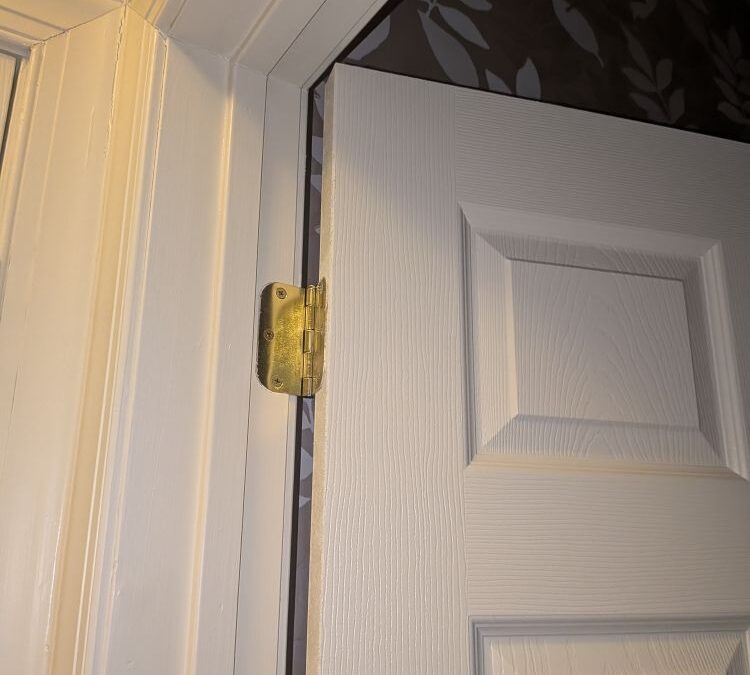
- Tighten all hinge screws, especially the top hinge (it carries the most weight).
- Replace short or stripped screws with 2.5–3 inch wood screws that will go deeper and fasten to the framing stud. This can lift the door and often provides more clearance at the top latch side.
- If a screw hole is blown out, plug it with wood glue and hardwood dowel (or my favorite, toothpicks), then re-drill/screw.
- Use thin shims behind a hinge leaf to tweak the reveal. For example, a shim behind the lower hinge can swing the latch side up slightly.
3) Only remove material if needed
If tightening and shimming don’t solve the door sticking in humidity, you may need to remove a little bit of material:
- Mark the tight area and plane or sand sparingly (less than 1/16″). Take a few passes, test, repeat.
- Seal and repaint any freshly cut edges so the problem doesn’t return next season.
Loose Hinges and Door Sag
Humidity exaggerates small hinge issues. A slightly loose top hinge makes the latch side drop, which is why you’ll see a tight gap at the top and a wide gap at the bottom.
- Retighten and upsize screws (see above).
- Replace worn hinge pins or bent hinges if they are not well aligned with the pin.
- Make sure hinge leaves sit flush in their mortises; high spots can push the door out of alignment.
Latches That Won’t Catch (Strike Plate Alignment)
When a door swells or sags, the latch often misses the strike plate.
- Color the latch bolt with marker, close the door, and check where it hits the strike. High/low marks tell you which way to move the plate.
- Loosen the strike screws and shift slightly. If needed, chisel the mortise to reposition and secure with longer screws.
- Another option is lightly filing the strike opening—helpful for a small seasonal tweak.
Weatherstripping and Threshold Issues
Weatherstripping can swell, compress unevenly, or come loose, adding friction. Thresholds may be set a touch too high.
- Inspect the kerf-in weatherstripping for tears and flattening. Replace if it’s misshapen or sticky.
- Check the door sweep for drag and gaps.
- On adjustable thresholds, turn the screws a quarter-turn at a time to reduce rubbing while keeping a proper seal.
What Not to Force
- Don’t slam the door or crank a deadbolt to “muscle it” shut—you’ll bend hardware or split the jamb.
- Don’t remove too much material at once. Humidity is seasonal; over-trimming can leave a gap during wintertime.
- Avoid oil-based lubricants on locks and latches; use a dry lubricant instead.
Reduce Moisture to Reduce Sticking
- Run a dehumidifier in damp areas (basements, first floors over crawlspaces).
- Use bath and kitchen exhaust fans to vent moisture outside.
- Keep interior paint in good shape—well-sealed edges absorb less moisture.
If your windows also feel sticky when it’s muggy, this post can help: Fix Window Problems.
When to Call a Professional
If a door sticking in humidity is driving you nuts—or you’d rather skip the trial and error—reach out to Help Me Henry. We’ll get your doors closing smoothly again so you can get on with your day.