
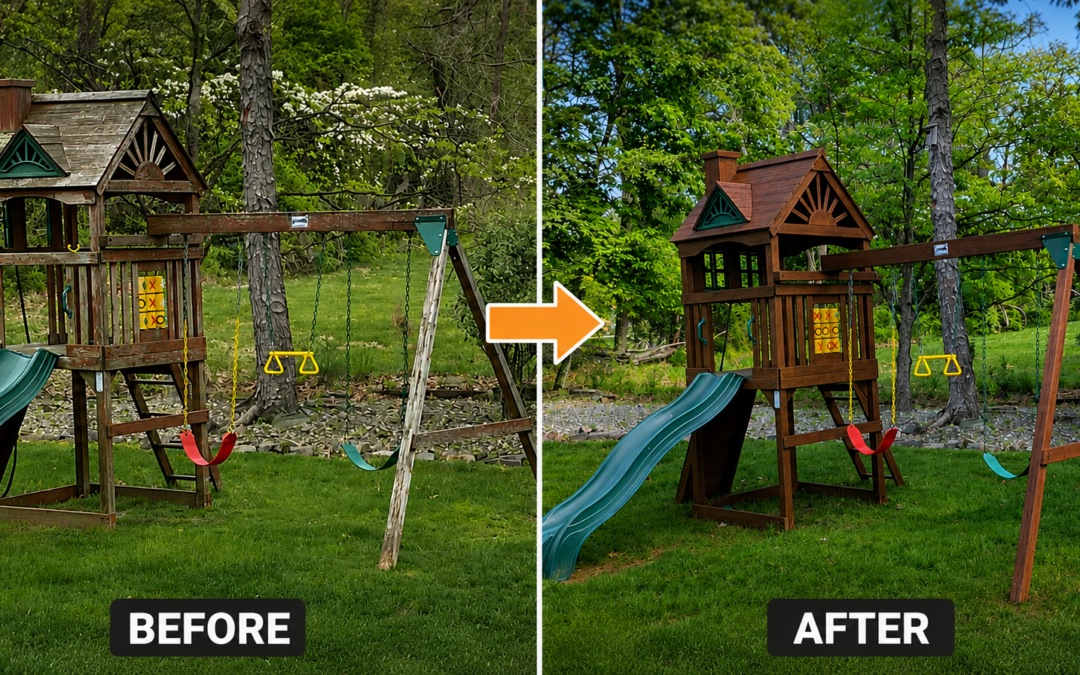
How to Re-stain a Wooden Playset
A fresh coat of stain keeps a wooden playset safer and looking good. It protects against UV damage, controls splinters, sheds water, and helps your set last longer. If you’re wondering how to restain a wooden playset without overcomplicating it, this step-by-step plan will get you there, whether you’re in Bridgewater, Hillsborough, Somerville, or anywhere in Somerset County, NJ.
Quick Checklist
- Tools: socket set, screwdrivers, sanding block or random-orbit sander, 80–120 grit paper, soft brush, paint pads/brushes, clean rags, drop cloths, moisture meter (helpful), masking tape/plastic
- Materials: semi-transparent exterior stain with UV blockers, oxygenated deck cleaner, mild detergent, safety caps for bolts (if needed)
- Time: 1–2 partial weekends for cleaning, drying, sanding, and staining
- Weather window: 48–72 hours of dry, 50–85°F, low to moderate humidity, shade or off-sun application
1) Safety-First Inspection (Before You Stain)
Start with a simple tune-up. It matters: stain won’t fix loose hardware, rot, or sharp edges.
- Check posts at ground contact for softness, crumble, or dark rot. Look at mulch lines and where supports meet soil. Probe gently with a screwdriver.
- Footings and anchors: Confirm posts aren’t wobbly. Tighten rusted anchors or replace if needed. Ensure hardware is snug but not crushing the wood.
- Tighten/replace hardware: Lag screws, carriage bolts, and swing hangers should be solid. Add safety caps to exposed bolt ends.
- Replace cracked rungs/rails and any split boards that flex under weight.
- Splinter control: Sand raised fibers. Slightly round sharp corners on handholds, rails, and seats.
2) Pick the Right Stain for Play Equipment
You want durable protection without a slippery surface.
- Type: Semi-transparent exterior stain with UV blockers. Low-sheen or matte is best for grip.
- Water-based vs. oil-based (NJ climate): Water-based products dry faster, have lower odor/VOCs, and hold color well through humid summers. Oil-based can penetrate a bit deeper and may bead water longer, but take more time to dry. Both are child-safe once fully cured—follow the label.
- Color: Mid-tones that hide dirt but show grain work well: cedar, redwood, or light walnut. Match to cedar/redwood or pressure-treated pine. Avoid very dark colors on sun-exposed surfaces—they can run hot.
3) Prep Without Damaging the Wood
Good prep makes stain last. Keep it gentle.
- Dry debris off first: Sweep or blow leaves and dust.
- Clean: Hose rinse, then scrub with oxygenated deck cleaner and a soft brush. Avoid harsh bleach that can weaken wood fibers.
- If you use a pressure washer: Stay around 1,200 PSI max, use a wide fan tip, and keep a safe stand-off (12–18 inches) to prevent furring. Work with the grain. For more on safe washing, see Power Washing Tips: Cleaning Your Home Safely and Effectively.
- Rinse thoroughly and let dry 24–48 hours. Add time after heavy rain or in high humidity common to Somerset County summers.
4) Sanding and Masking
- Scuff sand high-contact areas (80–120 grit): handrails, ladders, treads, and seats. Remove raised grain and any flaking old finish.
- Dust control & PPE: Collect dust with a vacuum and wear a mask/eye protection. With older pressure-treated lumber, avoid breathing dust—clean up thoroughly.
- Mask and remove: Tape off slides, ropes, chains, metal hangers, and plastic parts. Take swings down so you can work freely.
5) Application Plan: Efficient Order and Technique
- Timing: Work top-down, in the shade or off-sun. Surface moisture should be below ~15% (a low-cost moisture meter helps).
- Pre-seal end grain: Brush stain on cut ends and checks first. They soak up water fastest.
- Brush and back-brush: Use a stain pad or brush. Push stain into joints, around hardware, and between slats. Wipe drips right away. Depending on the playset and wind conditions, a sprayer may be a great tool for you here – but you should still make sure to back-brush!
- Thin, even coats: Avoid film build on steps, ladders, and handholds for better traction. Many semi-transparent stains cover roughly 150–300 sq ft per gallon on rough wood—check your label.
- Recoat timing: Follow the can. Typically 15–60 minutes between passes if the wood is still wet-on-wet, or 24 hours if a second coat is recommended. On dense or previously sealed areas, a heavy second coat can get sticky—stop at one if the wood looks evenly colored and repels water.
6) Dry and Cure: When It’s Safe to Play
- Dry-to-touch: Often 4–8 hours, longer in cool or humid weather.
- Full cure: Commonly 24–72 hours. Follow product guidance.
- Smell test: Odor should be faint. Finger-slide test: Slide a clean finger on a tread or rail—there should be no tackiness and no color transfer before kids use it.
7) Maintenance Plan for NJ Weather
- Annual gentle wash: Hose and a soft brush with mild cleaner. Skip strong pressure.
- Spot-sand any rough patches each spring.
- Recoat every 2–3 years, or when water stops beading. South-facing sides in Bernards or Watchung may fade faster with stronger sun.
- Keep mulch clear at posts and improve drainage to reduce moisture and rot risk.
8) Common Mistakes to Avoid
- Power washing too close and raising the grain
- Skipping dry time between cleaning and staining
- Staining in direct, hot sun
- Applying thick coats or glossy/film-forming finishes that get slippery
- Accidentally staining plastic slides or metal hardware
- Ignoring loose hardware or early signs of rot
- Using interior polyurethane or paint on treads/handholds
Need Help?
If your playset needs repairs before stain, or you want it handled start to finish, Help Me Henry is local and ready to help in Somerset County, NJ. We keep it practical and safe so kids can get back to play. See our services and schedule a visit.